
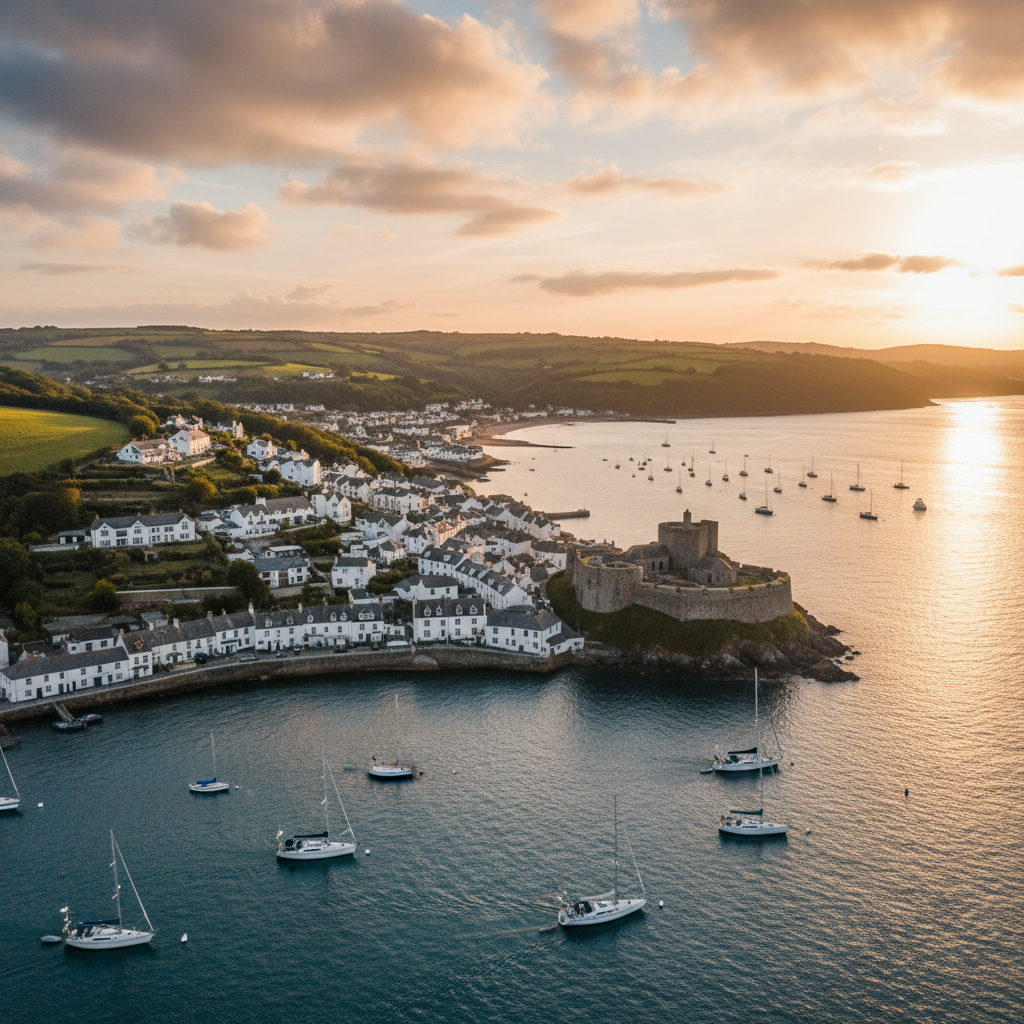
A Quiet Arrival
Arriving in St. Mawes, the first thing to greet you is the air—a briny, fresh breath that carries with it the faintest hint of woodsmoke from nearby cottages. I parked my car in the small lot near the church (there’s just enough room for a dozen vehicles if you’re lucky), then ambled down the narrow, winding lanes that define this Cornish village. The sound of waves against the rocks fills the corners of the streets, and soft footsteps on the cobblestones echo against the high, whitewashed walls of houses that spill onto the path, their colours bright yet softened by time.
A Glimpse into History
St. Mawes, named after a sixth-century saint, is a village steeped in maritime history, overlooking the harbour that was once a bustling site for fishing and trade. This area of Cornwall has long been shaped by the sea; from the 16th century onwards, St. Mawes was a pivotal location during shipbuilding and later naval battles. The remnants of this history linger, particularly through the large, imposing St. Mawes Castle, built in 1540 under the reign of Henry VIII. As I stood before its stout stone walls, I could feel the weight of centuries past, listening to the stories whispered by the gentle breeze.
Local Highlights
The village itself, though modest, offers delightful pockets of discovery. Several local establishments line the central lane, including a small bakery, and the local store which, while unobtrusive, supplies a fine selection of local goods, from pasties to fresh fish caught by local fishermen. The shop is usually quiet, save for a few regulars who exchange pleasantries and anecdotes—worn conversations that speak to a deep-rooted community.
St. Mawes Castle
Visitor numbers can vary, but midweek is traditionally quieter. If you choose to explore St. Mawes Castle, a visit on a drizzly afternoon can be profoundly atmospheric—just don’t forget your umbrella as the weather can turn quickly. Standing atop the castle, I marveled at the layered blues of the water below, its surface shifting with the breeze, punctuated by the occasional somber cry of seagulls. The views from here are different every hour, every season, especially when the clouds mingle with the horizon.
Walking Routes
For the more adventurous, the coastal path running from St. Mawes to Place is a must. The path is relatively narrow and at times uneven—not for the faint-hearted in wet conditions—but the sense of solitude it offers is palpable. The way is lined with wildflowers and patches of gorse, and larger fields of grass sway gently in the wind. As I walked, the sound of the sea receded and a serene silence fell over the land, broken only by the soft rustle of grass and the chirp of distant birds.
Food and Drink Recommendations
At the end of my walk, I stumbled into the local pub, The Victory Inn, looking nothing special from the outside but rich in character. It draws both residents and visitors, especially in the evenings. The menu—a mix of seasonal specials and traditional pub fare—invites you to unwind. A comforting bowl of chowder paired well with a pint of local ale, the kind that warms you from the inside and encourages conversation with the locals seated around. It’s not fancy, but it feels honest and comforting.
Seasonal Atmosphere
As the seasons change, so does St. Mawes. In the summer, the village buzzes with life—families on holiday spill into the beach, children wade into the shallows, and the sound of laughter dances on the wind. But visit in autumn, and you witness a different spirit. The crowds thin, and there are moments of stark beauty, like the turning leaves framing the harsh sea beyond. Winter brings its own charms, where the grey, cold mornings invite a slower pace, a chance to reflect by the fire with a good book and a steaming cup of tea.
A Closing Reflection
This is the essence of St. Mawes, a reflection on the gentle rhythm of life by the sea. It’s a place to breathe, to witness the enduring nature of a community that remains steadfast against the tide of time. While the world outside continues to rush, here, the days fold into one another quietly, marked by the sounds of nature, the aged stones of the castle, and the steadfast presence of the local fishermen still casting their nets into the waves as they have for generations.
Coastal Connections
Exploring the waters off St. Mawes is as engaging as traversing its land. The village is serviced by regular ferry trips, notably to the nearby town of Falmouth. This crossing not only provides a well-deserved break from the village's slow pace but also offers a fascinating glimpse into the maritime life that has shaped this region. The ferry ride, often filled with passengers from both sides, connects two worlds—the tranquil lifestyle of St. Mawes and the bustling activity of Falmouth's shops and eateries. If you decide to embark on this journey, be sure to check the summer schedule when trips are more frequent and the waterways teem with activity.
As I waiting for my ferry, I watched a small fishing boat return to the harbour, its nets brimming with the day’s catch. There’s an authenticity to the scene that is hard to replicate anywhere else. The fishermen returned with proud smiles, greeted by the locals who would soon transform the day’s bounty into tonight’s supper. For anyone considering a visit, it’s wise to time the trip with the tides to ensure you experience this vibrant scene.
Art and Culture
Delving deeper into its cultural threads, St. Mawes hosts a small community of artists who draw inspiration from the ever-changing sea and landscape. The village is home to a few galleries that feature local artworks—paintings, ceramics, and photography reflecting the essence of Cornish life. The St. Mawes Art Group, composed of local artists, regularly exhibits work, creating opportunities for community engagement through art walks and open studio events. Keep an eye on their schedule; an art stroll on a sunny afternoon can be a delightful way to mingle with locals and experience the vibrant artistic spirit of the village.
During the summer months, the annual St. Mawes Music Festival enlivens the atmosphere of the village with performances set against the idyllic backdrop of the harbour. Having attended a few concerts myself, I can affirm that witnessing local musicians against the sound of the waves creates an intimate and memorable experience, one that resonates long after the notes fade into the dusk.
Wildlife Encounters
For the nature lovers, St. Mawes is a threshold to rich marine wildlife. The coastal waters are home to an array of birds; if you have binoculars at hand, you may catch sight of cormorants diving for fish or egrets poised along the shoreline. Initiating a quiet walk early in the morning can reward you with a seemingly untouched stretch of coast, where you may stumble upon herons stalking their prey in the shallows. The nearby St. Mawes to Place coastal path provides several vantage points for birdwatching. Along the route, you might also spot seals sunbathing on the rocky outcrops—an enchanting sight that underscores the natural heritage of the area.
Where to Stay
Accommodation options in St. Mawes run the gamut from charming guesthouses with sea views to self-catering cottages perfect for families. A popular choice for many visitors is The St. Mawes Hotel—a contemporary establishment that embraces modern design while respecting the village's nautical heritage. It’s positioned with a spectacular view of the harbour, perfect for watching the sun set over the water. While slightly higher on the price scale, this hotel provides an experience that encapsulates the charm of St. Mawes with comfortable lodgings. For a more rustic stay, several traditional bed and breakfasts line the village’s winding roads, where you will likely be treated to hearty breakfasts featuring local ingredients.
Seasonal Delights
Winter in St. Mawes has a magical quality of its own, marked by decreased tourist footfall and serene solitude. Many of the local shops and restaurants may have limited hours, but this offers a chance to engage with the community more deeply. The Victory Inn often hosts locals during the colder months, where you can enjoy seasonal ales around a fire. There’s something special about huddling together with locals on damp evenings, sharing stories over a half of ale, that speaks to the essence of village life here.
Visiting during the spring is another opportunity to witness transformation, as the flowers bloom and the coastline reawakens. The gardens in and around St. Mawes begin to burst with colour, and the coastal path flourishes with life. It’s a welcome renewal, drawing in visitors more eager to walk the paths that hug the cliffs, often accompanied by the muffled call of distant waves.
A Taste of Tradition
No visit is complete without sampling St. Mawes’ culinary heritage. In addition to the local bakery, the village is known for its seafood delicacies. Many restaurants offer seafood caught the same day, prepared simply to highlight the fresh flavours of the coast. If you’re fortunate, you might encounter a pop-up stall selling locally sourced crab sandwiches at the harbour, ideal for a picnic while soaking in the cove’s views. Pair your meal with a bottle of Cornish cider, a local favourite, and you’ll understand why food culture here embodies both tradition and innovation. Don’t shy away from chatting with the chefs who’re often keen to share the stories behind their dishes and the importance of local ingredients.
Final Thoughts
Returning to my car, the sun setting behind me as the air grew cool, I felt profoundly connected to St. Mawes—a place where time seems to linger a little longer. Here, the rhythm of life is dictated by the tides and the seasons, a soothing reminder of nature’s persistence. It’s a locale where the complexities of modern life feel distant, replaced by simple, honest joys: a meal with friends, an afternoon stroll, the laughter of children, and moments of serene contemplation by the water's edge. As I departed, I knew St. Mawes would stay with me—a gentle echo of authenticity in a world often too fast-paced.