
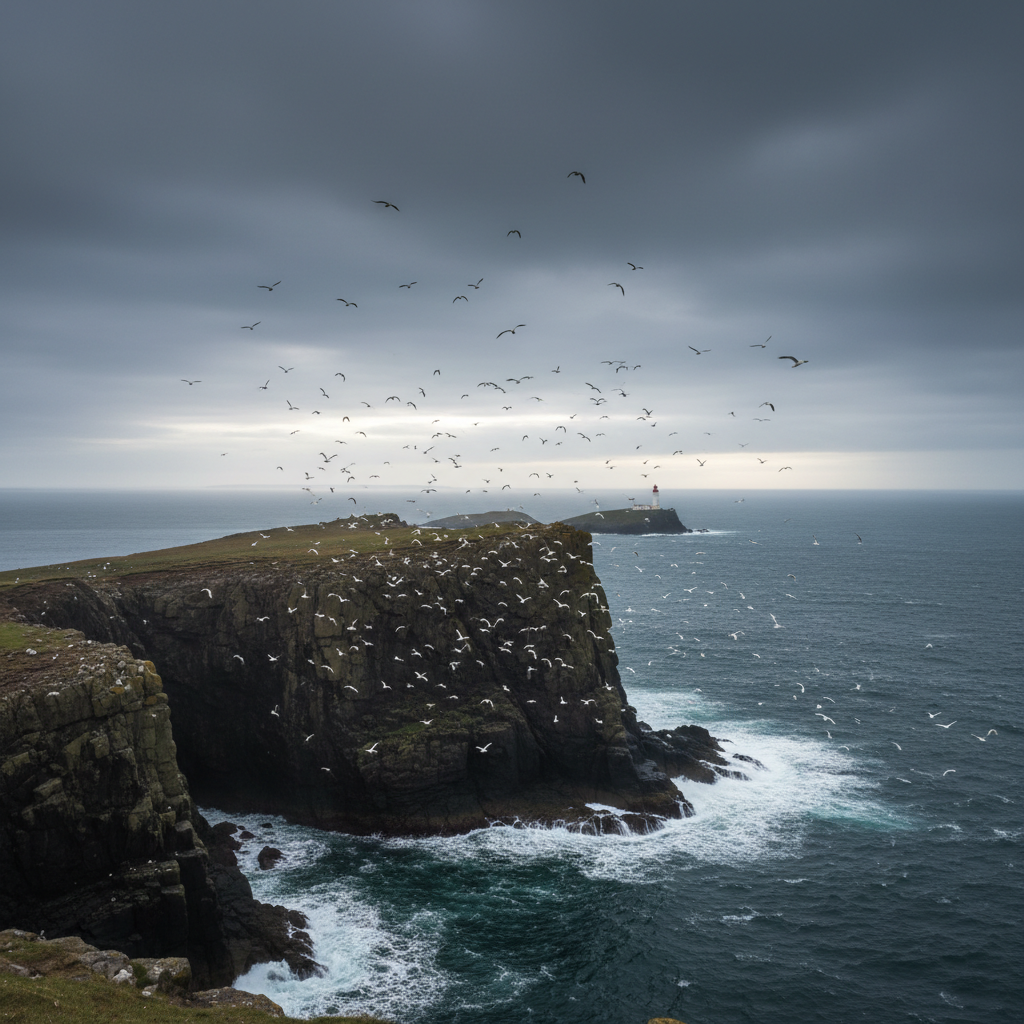
The Loneliness of the Isle
As I parked my car at the small lay-by just past the village of St. Abbs, I felt the cold bite of the North Sea wind wrapping around me. It seemed to ignite the air itself, filled with the faint, briny tang of the water nearby. I stepped outside into a grey afternoon that promised rain—typical for this part of the Scottish Borders, where the weather can change as quickly as the tides. The inevitable drizzle, fresh and light, cascaded down like threads of silver on the contours of the land.
The Landscape’s History
St. Abbs has long been a haven for those who seek a quieter corner of Scotland. The village is named after St. Aebbe, a 7th-century abbess believed to have lived in the area. Climbing to the headland, I could sense the weight of history and the solitude of the site; generations before had stood where I now stood, contemplating their own thoughts against the backdrop of the ever-moving sea.
A Connection with Nature
The silhouette of St. Abbs Head rises sharply, its jagged cliffs worn smooth by the relentless lapping of waves below. As I made my way along the well-trodden path from the village, the sounds shifted from the muffled chatter of seabirds to the sudden rush of wind—as if the landscape itself held its breath. The clifftops here act as perches for countless seabirds, and on this day, the sky was a chaotic canvas of white guillemots and black razorbills, dipped in shades of grey and beige.
The Highlights of St. Abbs
This area is remarkable not just for its natural beauty but for the sheer vibrancy of life it sustains, both human and avian. Nearby, the former fishing village has transformed over the years; several of the original buildings now serve as art studios or independent galleries, paying homage to the local marine heritage. Along the small harbour, you can often spot fishermen, their boats bobbing gently at anchor, waiting for the tide to carry them back into the expansive abyss.
Real Recommendations
For sustenance, the Ebb and Flow Café is a modest yet charming stop within the village. They offer a simple selection of cakes and drinks, perfect for warming chilly hands after a wander by the coast. It opens around 9am, so getting there early will spare you the chance of long queues that can form during lunch hours. Also, if you’re aiming for a packed lunch for your walk, the local shop stocks a decent selection of sandwiches and homemade pastries. Just be aware that it closes by 6pm, leaving you with limited options for dinner.
Exploring the Paths
The hike along the coastal path is a tangible experience of St. Abbs in its raw form. Starting from the small car park in St. Abbs, the trail leads you up towards the lighthouse at the head. The path here is uneven, lined with patches of coarse grass and wildflowers that cling desperately to life in the thin soil. In places, it dips steeply down to meet the cliffs, and you’ll need sturdy shoes to navigate the rocky terrain safely.
This hiking route, portion of the Southern Upland Way, rewards those who tread carefully with breathtaking glimpses of the rolling waves crashing against craggy rocks below. Even on a quiet day, the sound of the surf is ever-present, mingling with the wind's whispers and the cries of the gulls as they circle above. It’s important to pause; moments spent absorbing the vastness evoke the relentless nature of the sea and the fragility of existence.
What to Expect
Visiting in late spring or early autumn often provides the best experience, avoiding the summer crowds while still offering decent weather. Prepare for sudden rain showers and temperature fluctuations; layers are essential. As I stood at the cliff edge, feeling the spray of the ocean and the wind tugging at my coat, there was a stir of emotions—humility, introspection, a gentle reminder of one’s place beneath the grand canopy of nature. There are no manicured paths or arranged scenery here; just raw beauty and the reality of our world.
Closing Thoughts
As I took the last few steps back towards the village, the sky began to clear briefly, allowing patches of pale sunlight to punctuate the grayness—the warmth contrasting starkly with the chill. St. Abbs Head is not a place that bombards you with splendor; instead, its essence speaks in more subtle tones, each gust of wind carrying with it the stories of its tumultuous past. Even now, standing at the edge, I detected the quiet strength of a place that remains steadfast against the tides of time.
The Lighthouse and Its Stories
As I neared the lighthouse perched resolutely on the headland, its weather-beaten façade told stories of mariners and boats who had sought its guiding light against the treacherous reefs and rocky outcrops. Built in 1851, the St. Abbs Lighthouse has been a vital point of reference for sailors navigating the turbulent waters of the North Sea. It stands 19 meters tall and has a characteristic light that flashes every twenty seconds, a beacon that has undoubtedly saved many a life throughout its history.
The adjacent keeper's cottage is intriguing; though no longer staffed, it houses a small information point where you can find insights into the area’s maritime history. On windy days, the sea spray dances against the rocks beside the lighthouse, and the sound of waves crashing against the shore fills the air, providing a small glimpse into the challenges faced by those who once worked here.
Local Fauna and Flora
In this stark landscape, there lies a rich ecosystem that flourishes despite the harsh conditions. The cliffs provide nesting sites for various seabirds, including puffins, which typically arrive to breed around April and can often be seen flitting about the shores until early August. Watching their comical waddling can be a delightful distraction from the chill in the air.
The site is also part of the St. Abbs and Eyemouth Voluntary Marine Reserve, which means you're likely to encounter local divers exploring the underwater riches off the coast. The diverse marine life include seals, dolphins, and an abundance of colourful fish, making it a premier location for both diving and snorkelling—even if just from a kayak on warmer days.
Getting to St. Abbs
St. Abbs is best reached from the A1, which runs parallel to the coast, connecting Edinburgh and England. The village is just a short detour onto the B1379 road, leading you directly to picturesque harbour views. Parking is available at the small lay-by just outside of the village, where space can be limited during peak visiting hours, particularly on sunny weekends. If arriving early isn’t your style, consider using public transport; local buses regularly run from Berwick-upon-Tweed and Eyemouth, easing the need to worry about parking altogether.
Accommodations and Amenities
For those wishing to extend their stay beyond a day visit, St. Abbs offers various choices for accommodation. The St. Abbs Hostel provides a budget-friendly option, set in an old school building with a cozy atmosphere. Closer to the coast, B&Bs such as The Sea Glass B&B offer personalised hospitality coupled with stunning sea views. Be sure to book ahead during the peak summer months, as availability can dwindle quickly.
The village itself supports a small community with a few local shops and cafes, perfect for stocking supplies or grabbing that post-hike coffee. Remember to support local businesses, especially in a place deeply tied to the fishing culture of Scotland. Small independent shops often display local crafts or food items, allowing a piece of St. Abbs to go home with you.
Seasonal Notes
Each season in St. Abbs has its unique charm, but the transition times of late spring and early autumn are particularly suitable for visitors seeking mild weather and fewer crowds. Come spring, the wildflowers bloom along the cliffs, decorating the landscape with splashes of colour against the dramatic gray rock, while autumn casts a golden hue across the terrain. However, be aware of the unpredictable Scottish weather. It’s wise to dress in layers, bringing waterproof gear in case of sudden changes; a combination of breathable fabrics will serve you well hiking along the coast.
Embracing the Solitude
Standing again at the cliff’s edge later in the afternoon, I was struck by how solitude slips like sand through the fingers. Here, the distance from city chaos creates space for reflection. Listening to the rhythmic swells, I felt straddled between the tumult of the sea and the calm of the sky, contemplating the deeper connection we hold with environments untouched by urban hands.
What’s vital to remember about places like St. Abbs Head is the intimacy it offers with nature. Few experiences rival standing alone on a cliff edge, listening to the landscape's heartbeat. The bustle of daily life fades away, leaving a gentle reminder of where we fit into the world: as individuals exploring, celebrating, and sometimes grappling with our existence.
Final Thoughts
As I departed St. Abbs, the sunlight gradually split the clouds above, illuminating the wet pavement like a promise of beauty in the simple. This quiet corner of the Scottish Borders isn't merely a destination. It's a sanctuary that invites introspection and fosters an appreciation for the world’s raw edges. Though small and often overlooked, St. Abbs retains a profound sense of history and nature; here, the land meets the sea, and solitude offers solace amidst the wild. Consider planning your visit to align with the ebb and flow of tides, enhancing your connection to this rugged expanse that remains steadfast, silently echoing the past while embracing the present.