
Arrival and Impressions
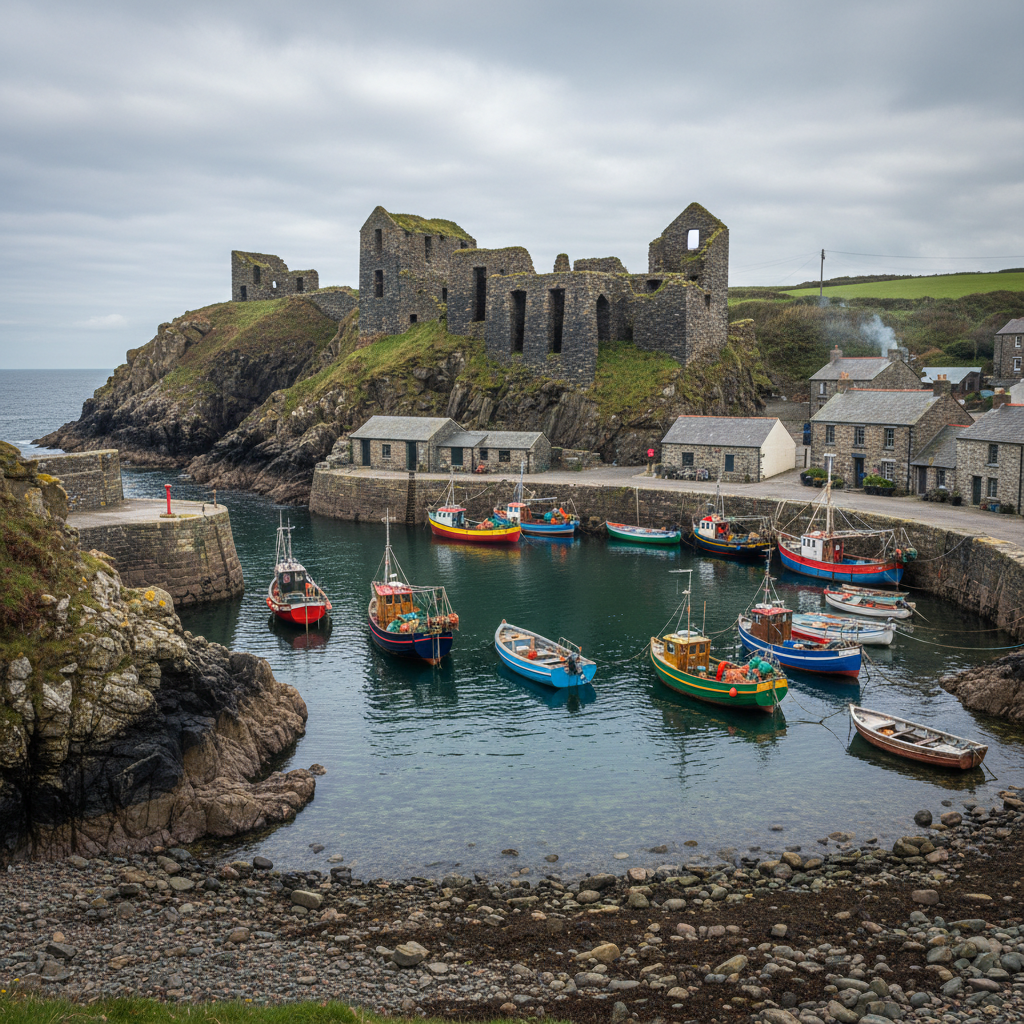
The sun struggled to break through a veil of clouds as I parked my car along the narrow, winding B4313. There’s limited parking along the harbour, so it’s best to arrive early to snag a spot—especially on weekends when the village can fill up with walkers and families. Immediate impressions of Porthgain are eclectic, shaped by time and tide. To my left was the old stone slate factory, still bearing signs of its industrial past, while to the right, colourful boats bobbed gently in the water, their paint peeling but still bright against the slate grey sky.
A Bit of History
Porthgain’s roots run deep in Pembrokeshire’s slate trade, with evidence of quarrying dating back to the 1800s. The village was built around this industry, which thrived when slate was king; the remnants of that era—tall chimneys and old structures, some of which have been repurposed into homes and businesses—still stand. The slate made its way across the globe, but when the trade started to decline, Porthgain transitioned into a quieter fishing port. Today, it retains that identity, albeit in a different form, with an emphasis on seafood rather than slate.
The Working Harbour
As I walked down the steep path towards the harbour, the slate-grey waters of the inlet came into view, contrasting starkly against the granite rocks. I noticed a fisherman mending his nets, his hands deftly working with a familiarity that suggested years of expertise. I paused to observe for a moment; this wasn’t a staged tableau, but rather a slice of daily life in Porthgain.
The harbour itself is small and can feel rather unassuming when the tide is out, exposing mudflats that reveal shells and seaweed. But there’s something wonderfully honest about the way the community continues to operate here—fishing boats return with the day’s catch, and the smell of seawater and creaking wood permeates the air.
Exploring the Village
Porthgain has a few small shops and restaurants, most of which feel like they have been around long enough to witness the highs and lows of the village's fortunes. As I strolled up the path towards the main street, I stopped at a small café named The Shed. It’s a modest place with an outdoor seating area, where patrons can enjoy views of the harbour while sipping on steaming cups of tea and coffee. The smell of freshly made cakes wafted from the kitchen, and I opted for a slice of Welsh cake, still warm, which turned out to be a perfect companion to my drink. There’s little pretension here; just good, honest local food.
Walking and Views
After my refreshment, I set out on the circular walk that leads along the coastal path to Abereiddy and back—a route I’d read about beforehand. The path gradually ascends, revealing sweeping views of the coastline as it curves toward the horizon. Portions of the trail are rocky and uneven, suitable footwear is a must; I noticed some folks struggling in sandals.
Along the way, I stopped to observe the wildflowers peeking through the cracks in the rocks and the occasional call of seabirds circling above. The weather remained unpredictable, as it often does in this part of Wales, shifting from bright patches of sun to sudden cool breezes accompanied by ominous clouds. I welcomed the breeze, which held a hint of salt and reminded me of the ocean's constant presence.
Returning to the Village
On my return to Porthgain, I found myself wandering back through the remnants of the slate factory. The structures felt heavy with history; the walls bore stains from years of exposure and neglect, yet stood resolutely against the elements. I caught sight of a small sign on one building, noting it as a ‘community arts space’—a welcome sign of revitalization amid the decay.
As it grew later in the afternoon and the light shifted toward golden hues, I noticed the village taking on a different character. Families began to gather, and couples strolled along the pier, their voices mingling with the sound of waves. There’s a sense of peace here, grounded not in grandeur but in simple moments shared amid a landscape shaped by both nature and industry.
Food and Drink
If you’re looking for a place to eat, the local pub, The Sloop Inn, is just a short walk from the harbour. It’s one of those unpretentious establishments that has been serving locals and visitors alike for decades. The interior is cosy, with wooden beams and an old stone fireplace, and the menu reflects local flavours—fish and chips, of course, but also hearty pies featuring local produce. The bar offers a good selection of local ales, perfect after a long walk.
Alternatively, just beyond the village is the nearby Tŵr Môr, a seafood shack that operates seasonally. It’s the ideal spot to grab some fresh fish, caught that very day, served right off the grill. Either option is satisfying and showcases the best of the coastal cuisine that this region has to offer.
Seasonal Atmosphere
Every season brings its own charm, but I found late spring particularly compelling. The hedgerows were alive with wildflowers, and the temperature spent much of the day hovering pleasantly around 15°C, with a light jacket sufficient for warmth. By the time I left, the sun had dipped below the horizon, casting a softer light over the village. Evenings can get chilly, so packing a sweater is advisable.
Closing Thoughts
Porthgain might not boast the grandiosity of some Welsh coastal towns, but it wears its history and character proudly, laden with stories of those who have called it home. In its rugged beauty and working life, it reminds us that the strength of a place is found not in its surface but in the everyday realities that give it depth. Here, at the edge of Pembrokeshire, it’s not just about the views, but about the weave of life that continues against the backdrop of a stunning shoreline. For anyone seeking an honest experience of Welsh coastal life, Porthgain offers exactly that.